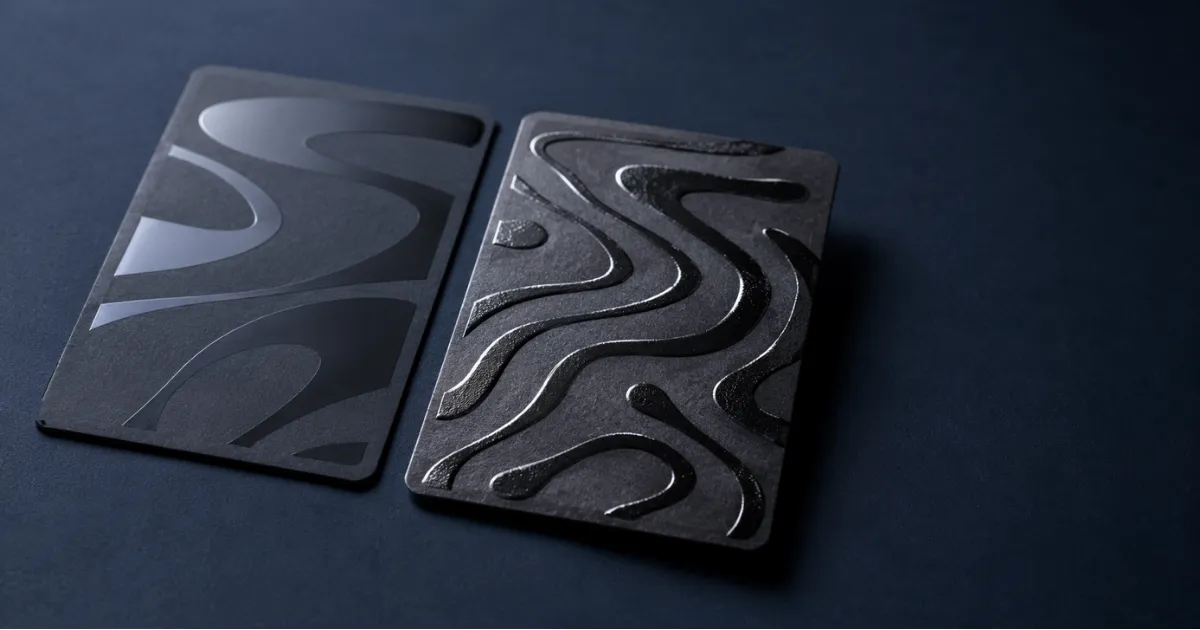
Spot UV and emboss UV both add a premium highlight to selected areas of a design, but they create very different effects. Understanding the difference helps you specify the right finish and set the right expectation with your client.
Spot UV: flat, high-gloss contrast
Spot UV cures a glossy layer over chosen elements — a logo, a headline, a graphic — while the rest of the surface stays as printed. The effect is a sharp contrast between matte and gloss, especially striking when applied over a matte or soft-touch laminate. It is flat to the touch but visually bold.
Emboss UV: raised, textured depth
Emboss UV — sometimes called textured or raised UV — builds a thicker coating so the treated areas physically rise from the surface. You can feel the difference, not just see it. It adds a sculpted, three-dimensional quality that suits luxury packaging, premium cards and statement logos.
Which one for your job?
Choose spot UV when you want crisp gloss contrast and a clean, modern highlight. Choose emboss UV when you want a tactile, raised, luxury feel. The two can even be combined for designs that mix flat and raised gloss. As always, a base laminate sets up the contrast — pair these with thermal lamination for the best result.
Not sure which fits your artwork? We're happy to advise.