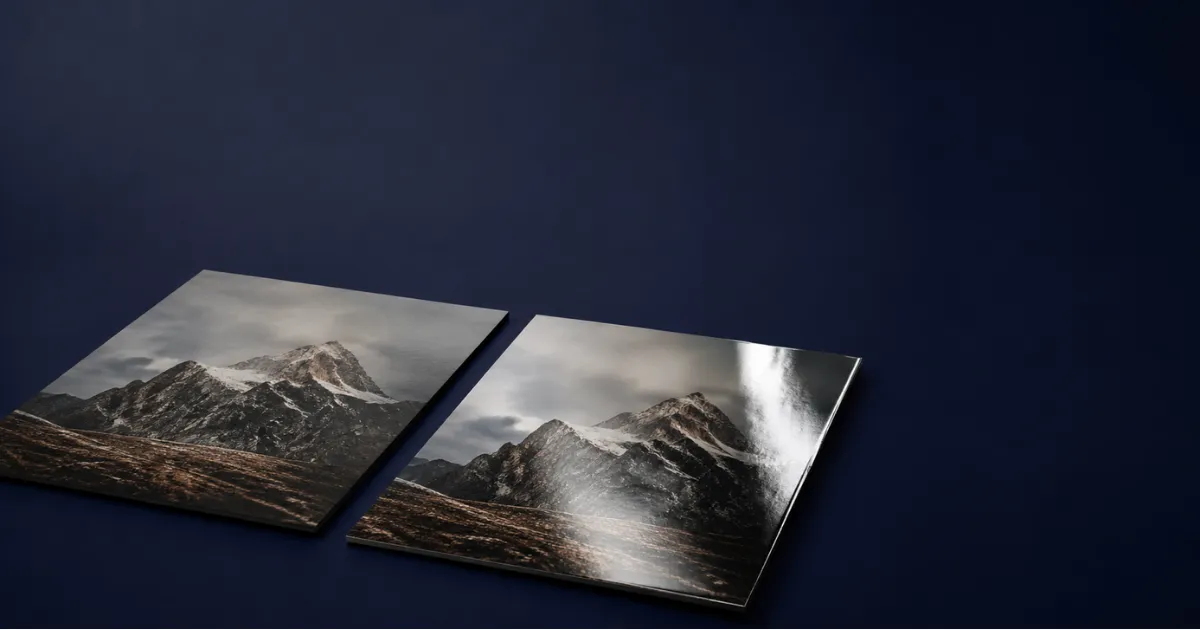
Lamination is one of the most common ways to protect and elevate a printed piece, but not all lamination is the same. The two main routes — thermal and cold — bond a film to your sheet in fundamentally different ways, and choosing the right one comes down to your substrate, your inks and how the finished piece will be used.
How thermal lamination works
Thermal lamination uses controlled heat to bond a film to the printed sheet. The heat activates the adhesive on the film, forming a tight, even layer. It is the go-to choice for covers, cartons and premium print because it produces a crisp, refined surface and supports finishes like matte, gloss and velvet soft-touch.
Because it relies on heat, thermal lamination is best suited to stocks and inks that handle a thermal process comfortably — which covers the large majority of offset print work.
How cold lamination works
Cold lamination bonds the film using pressure and adhesive instead of heat. That makes it ideal for heat-sensitive substrates, digital prints and large-format work where a thermal process could risk the print underneath. The result is a durable, protective surface applied with no heat at all.
Which should you choose?
If you are finishing covers, cartons or premium stationery and want a polished surface that can also carry spot UV or drip-off accents, thermal lamination is usually the answer. If you are protecting heat-sensitive or wide-format prints, cold lamination is the safer route. When you are unsure, the simplest path is to share your stock and end use with a finishing partner and let them recommend.
Still deciding? Tell us about your job and we will suggest the right approach.